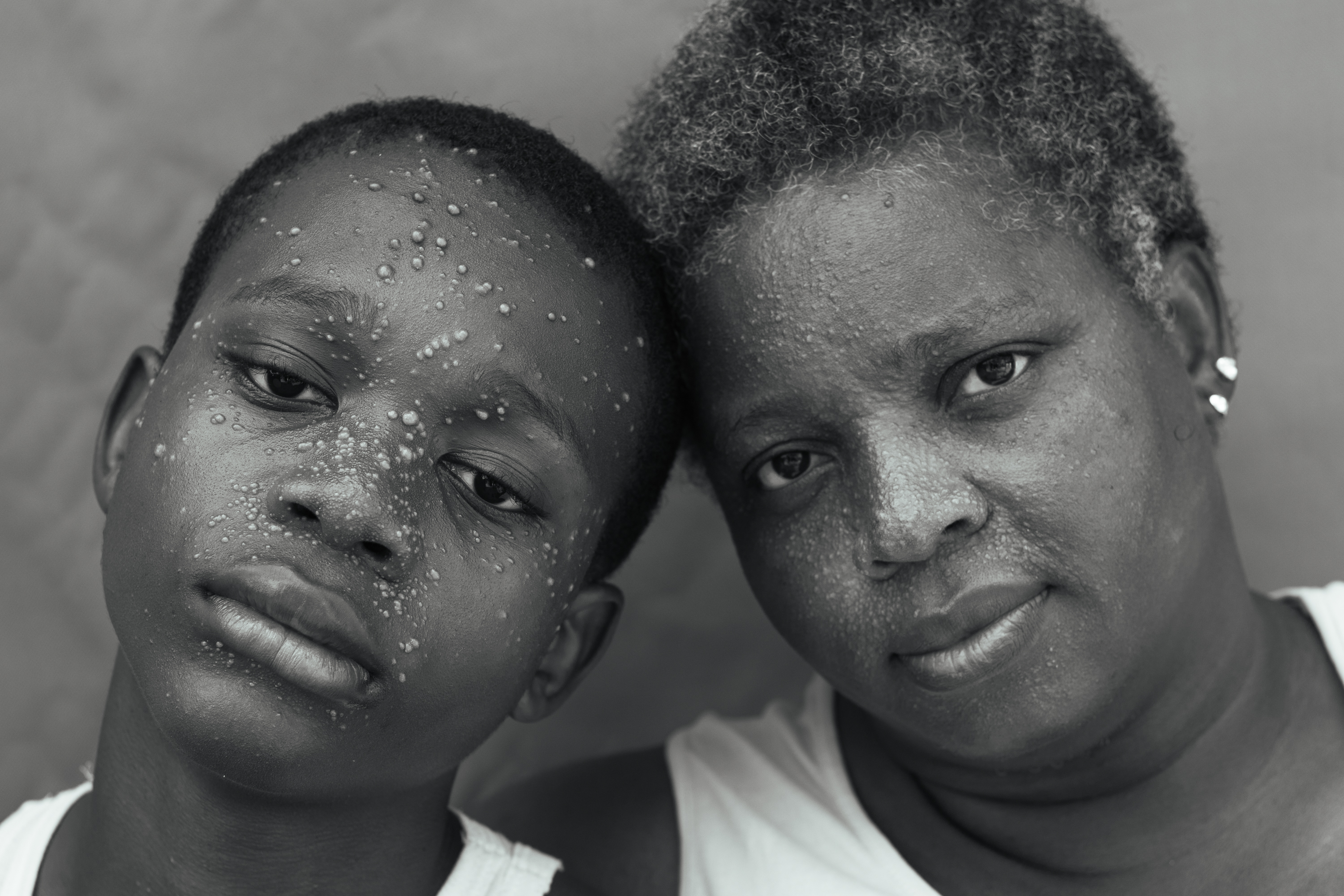

 ›
›
My family's skin condition is genetic. Many see it as a curse.
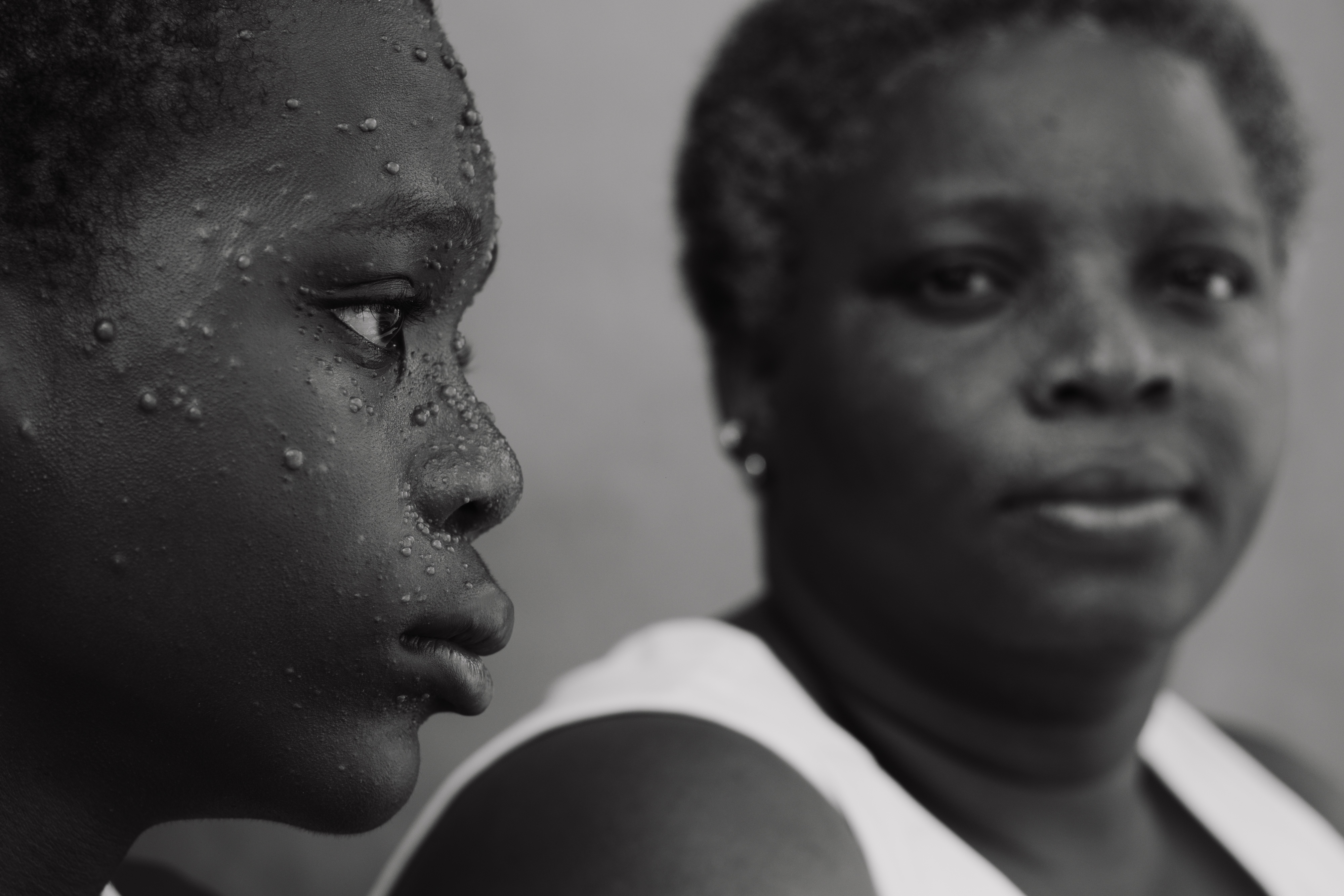
I turned my camera on the faces I grew up with to challenge the belief that trichoepithelioma, a rare genetic skin condition, is a sign of spiritual punishment.
My mother was excited the day she got admitted to study Political Science at the University of Calabar. Walking across campus to the library on her first day, she felt she finally had the chance to be independent of her parents, to chase her dreams and start her new life — until she was stopped by a woman slightly older than her.
"Jesus! What is this thing you have on your face?"
Growing up with trichoepithelioma, a rare benign skin condition that mostly appears on the scalp, nose, forehead and upper lip and originates from hair follicles, my mother had been surrounded by others with the same lesions — her mother, uncles, aunties and siblings. At home, her face wasn't unusual. But it still inspired me to start photographing it.
I began photographing my family long before I understood that I was documenting stigma. I had grown up seeing my mother's, siblings', grandmother's, aunts' and uncles' faces, so at home, trichoepithelioma was inherited, not interrogated. It was only as I grew older that I realised the outside world did not see what I saw.
The woman continued, calling the tumours a sign of a family curse and offering to take my mother to church for spiritual deliverance. My mother smiled as tears welled up in her eyes, already picturing the next four years: constant stares, hostile questions, and people treating her as though she were cursed. She would not be seen as a student, but as a spiritual problem in need of a divine solution.
Facing a heartbreaking choice, my mother turned around, walked back through the gate and gave up her spot. Not out of shame about her skin condition, but from the realisation that, in a deeply spiritual society, the unfounded belief that her condition was a punishment would always hang over her.
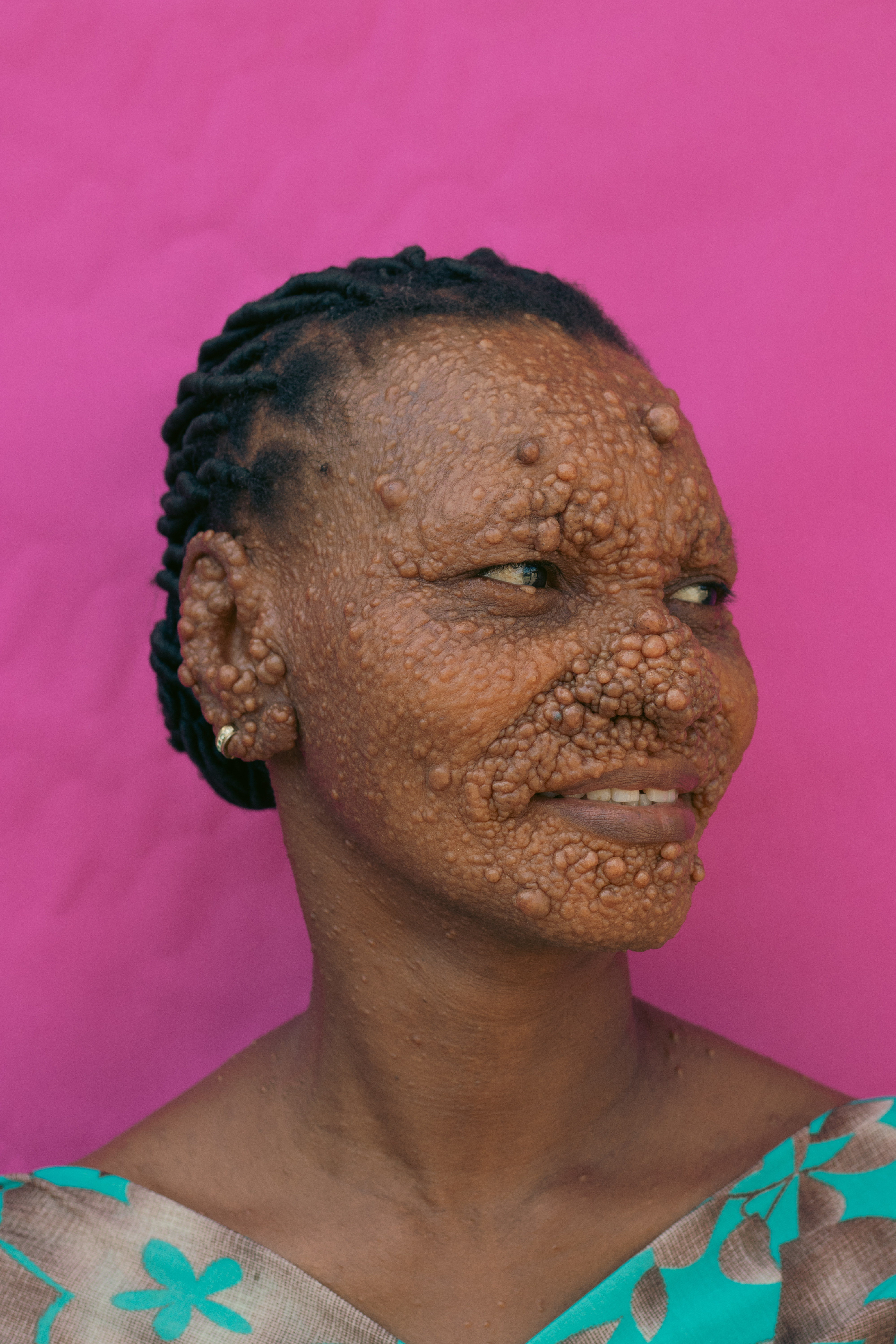
Trichoepithelioma is a rare benign skin condition that originates from hair follicles, appearing most commonly on the face and scalp. All photographs by Coltan Kubiangha.
The woman continued, calling the tumours a sign of a family curse and offering to take my mother to church for a spiritual deliverance. My mother smiled as tears welled up in her eyes, picturing the next four years: constant staring, hostile questioning, and people treating her like she was cursed. She would not be seen as a student, but as a spiritual problem in need of a divine solution.
Making a heartbreaking choice, my mother turned around, walked back out the gate, and gave up her spot. Not due to shame of her skin condition, but the realisation that the unfounded belief in a heavily spiritual society — of her skin condition being a spiritual punishment — would always hang over her.
After my mother told me about the day she walked away from university, the camera became something else. It was no longer just a tool for portraiture; it became a way to insist on presence. To insist that these faces deserved to be looked at without pity, without superstition, without spiritual diagnosis.
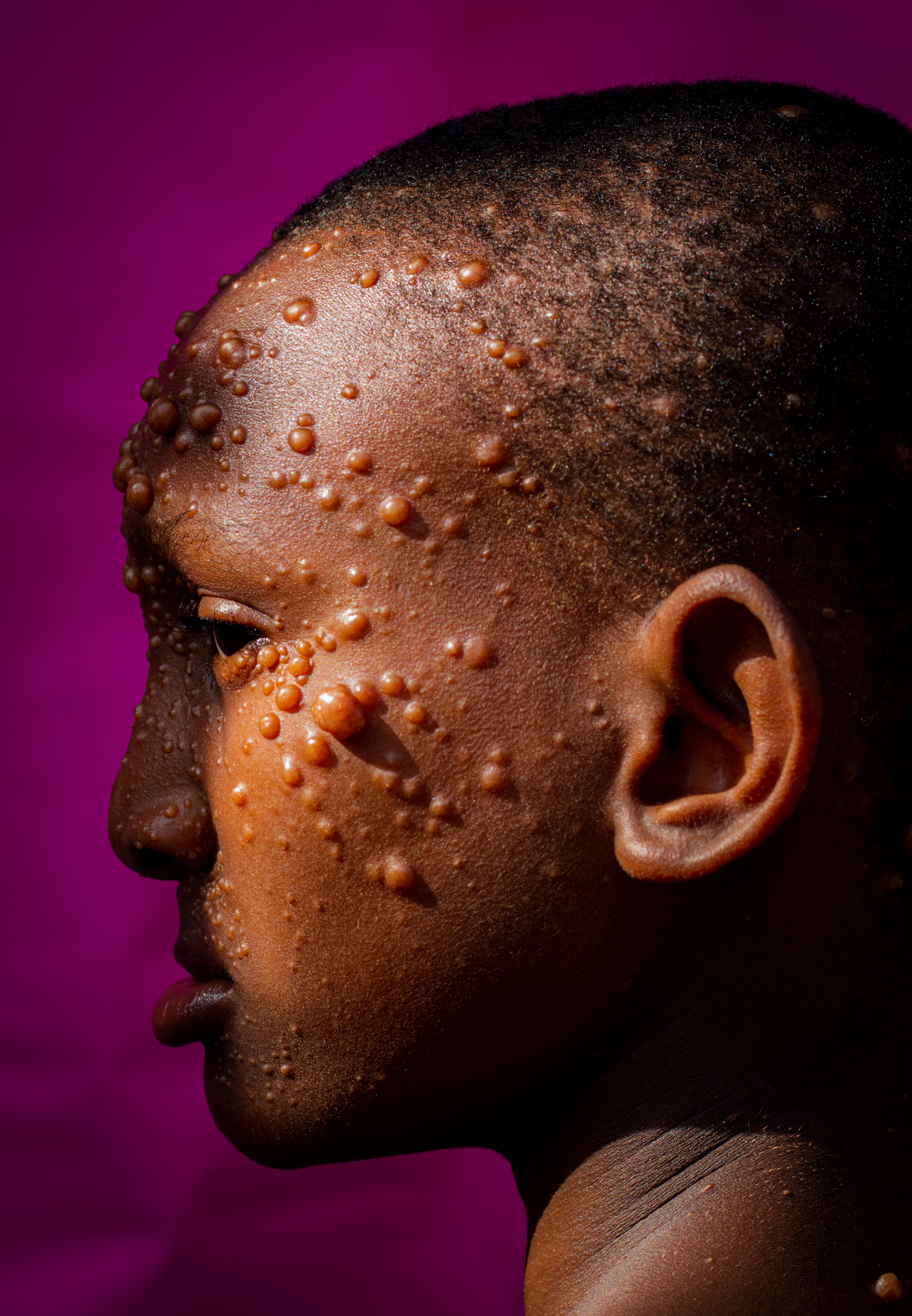
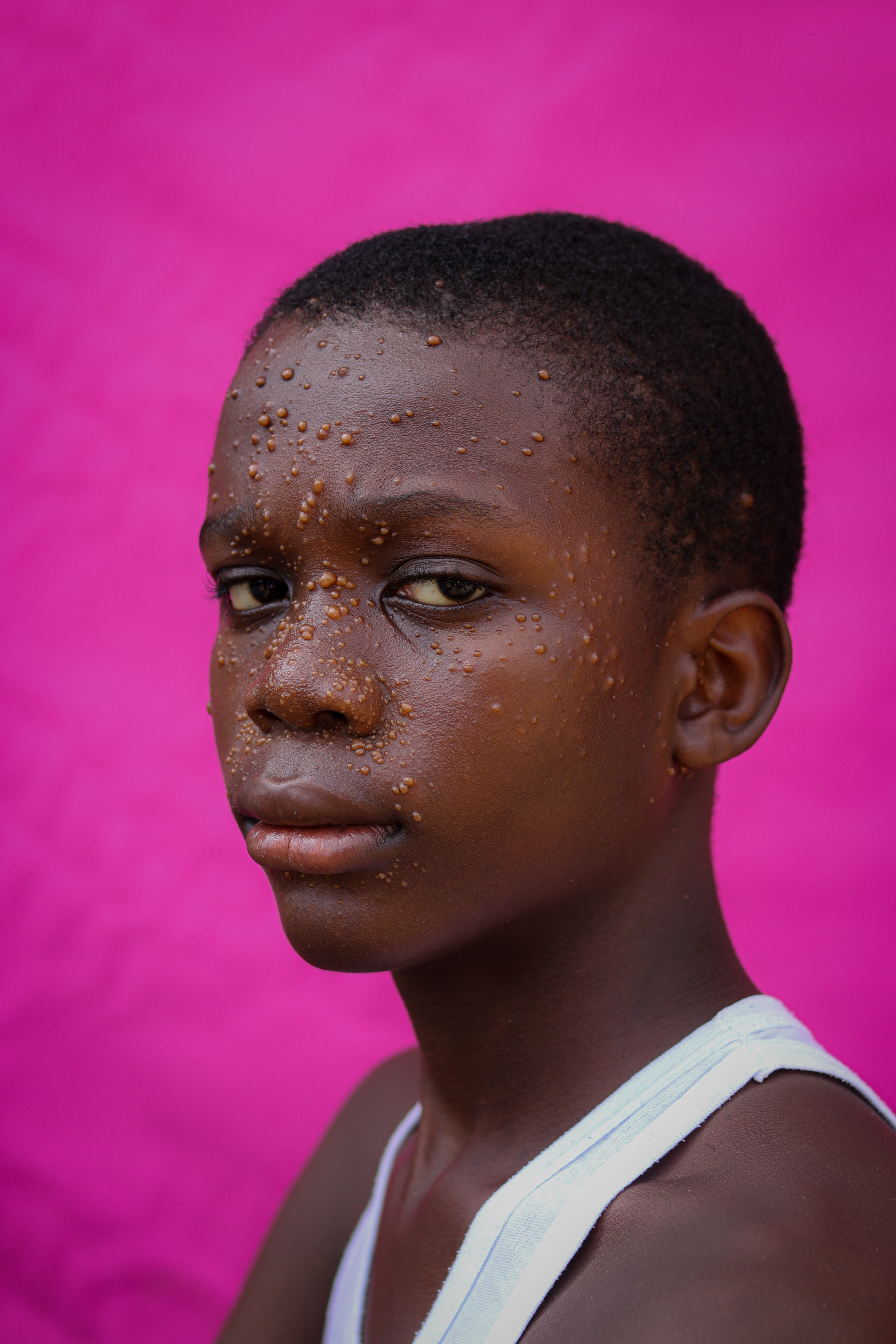
Portraits from the series.
Against this backdrop, I first asked my brother and cousins to pose in front of my camera; then my mother and her sisters followed. When I photograph my family, I create up-close portraits of their faces, choosing lighting and colours that accentuate rather than dim their difference. The intention has always been to create the representation they so rarely see.
"In markets, in churches, in waiting rooms, strangers appoint themselves interpreters of her body."
The encounter on campus was not an isolated one. On buses, passengers first notice the small benign tumours on my mother's face. Children passing by stare repeatedly, so intensely that it is difficult to decipher their expressions. The adults are easier to decode: their glares are marked by superiority or pity, accompanied by loud whispers. My mother knows their words.
In markets, in churches, in waiting rooms, strangers appoint themselves interpreters of her body. An elderly woman once sat beside her to offer unsolicited "medical" advice, recommending "powerful face-creams" and herbal concoctions, despite having no medical expertise.
For Asibong, my mother, and millions of people in Nigeria whose appearance contrasts with the norm, their conditions rarely remain medical; they are rendered supernatural, burdened with moral consequence.
For women, it is worse. Appearance is tied to virtue, desirability and worth, requiring them to wade through a sea of expectations about how a woman should look. To fall outside those expectations is to risk being seen as cursed, unclean or lacking faith. The face becomes evidence, and with it comes judgment.
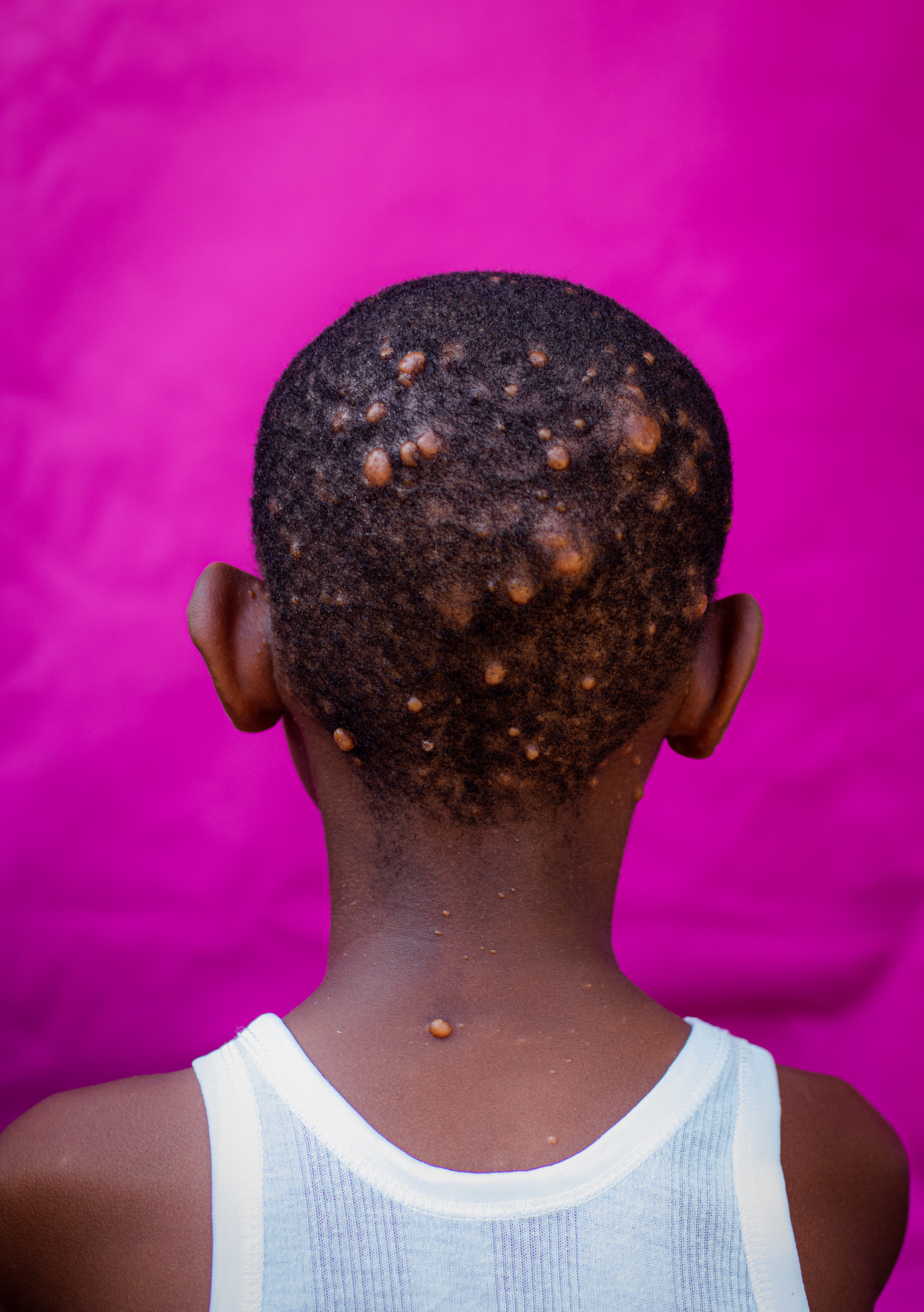
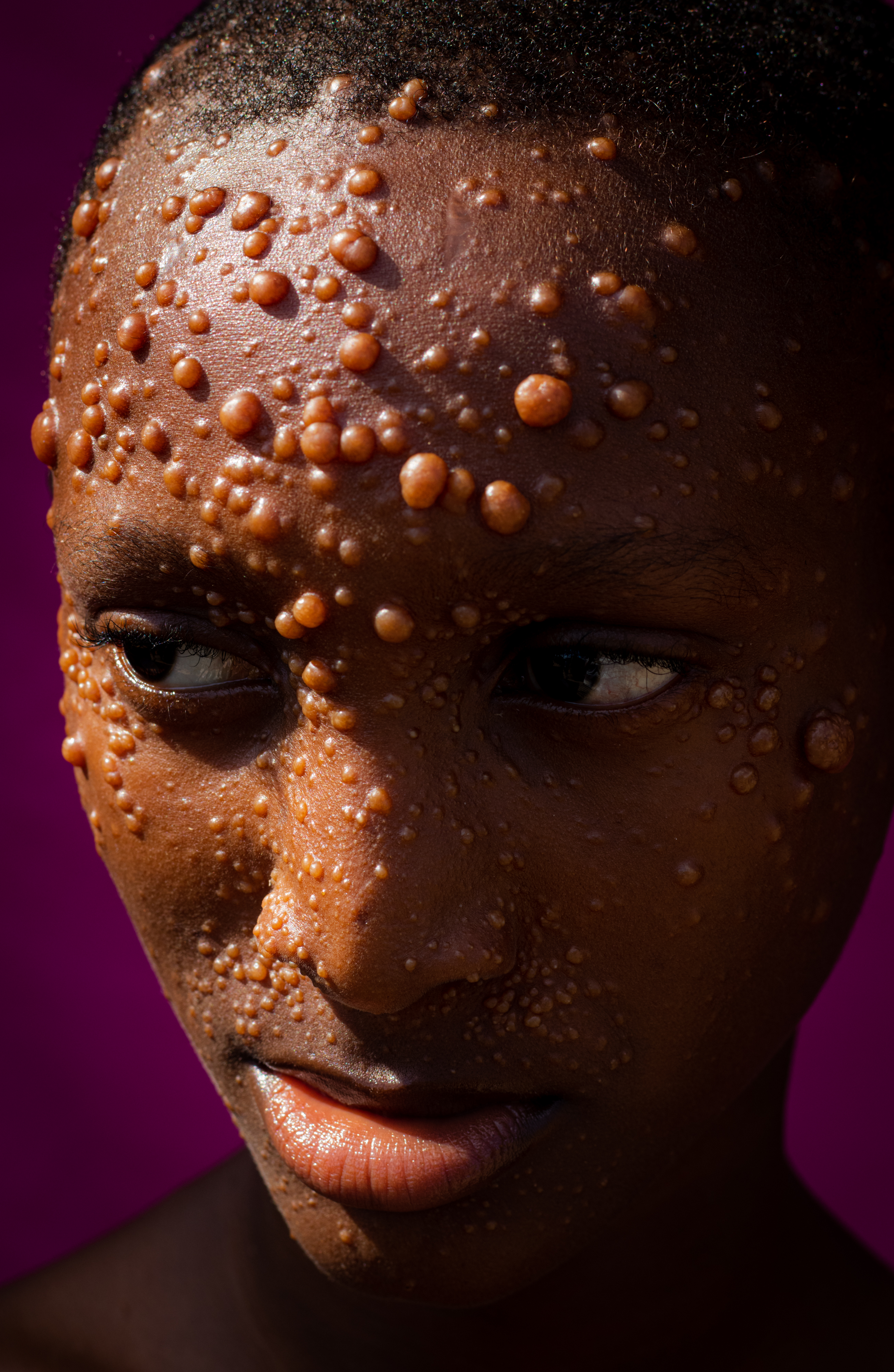
For Edemanwan, my mother, and millions of people in Nigeria whose appearance contrasts with the normative, their conditions rarely remain medical — they become supernatural, carrying moral consequences.
For women, it is worse. Appearance is tied to virtue, desirability, and worth. To fall outside those expectations is to risk being seen as cursed, as unclean, as lacking faith. The face becomes evidence, which comes with societal judgement.
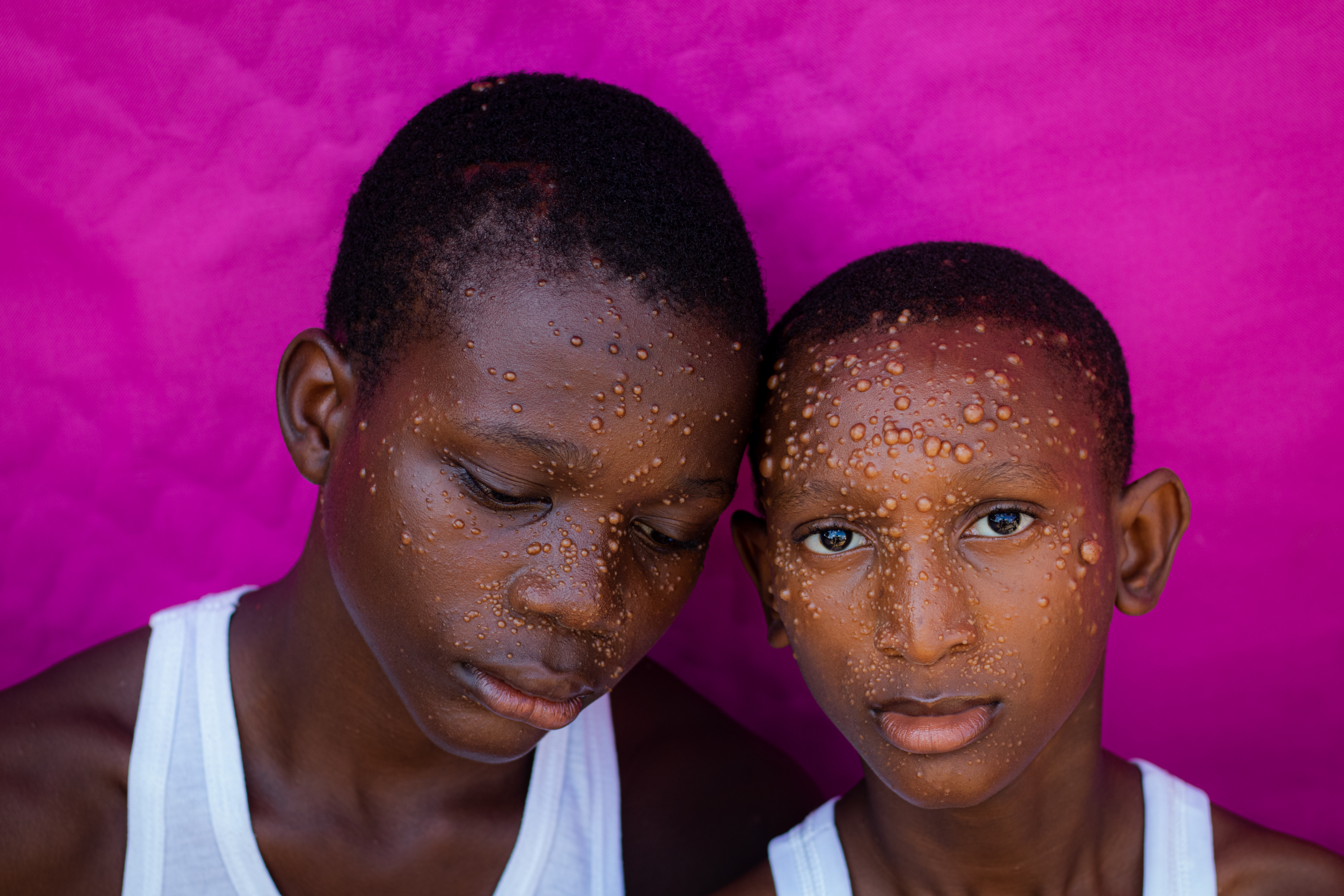
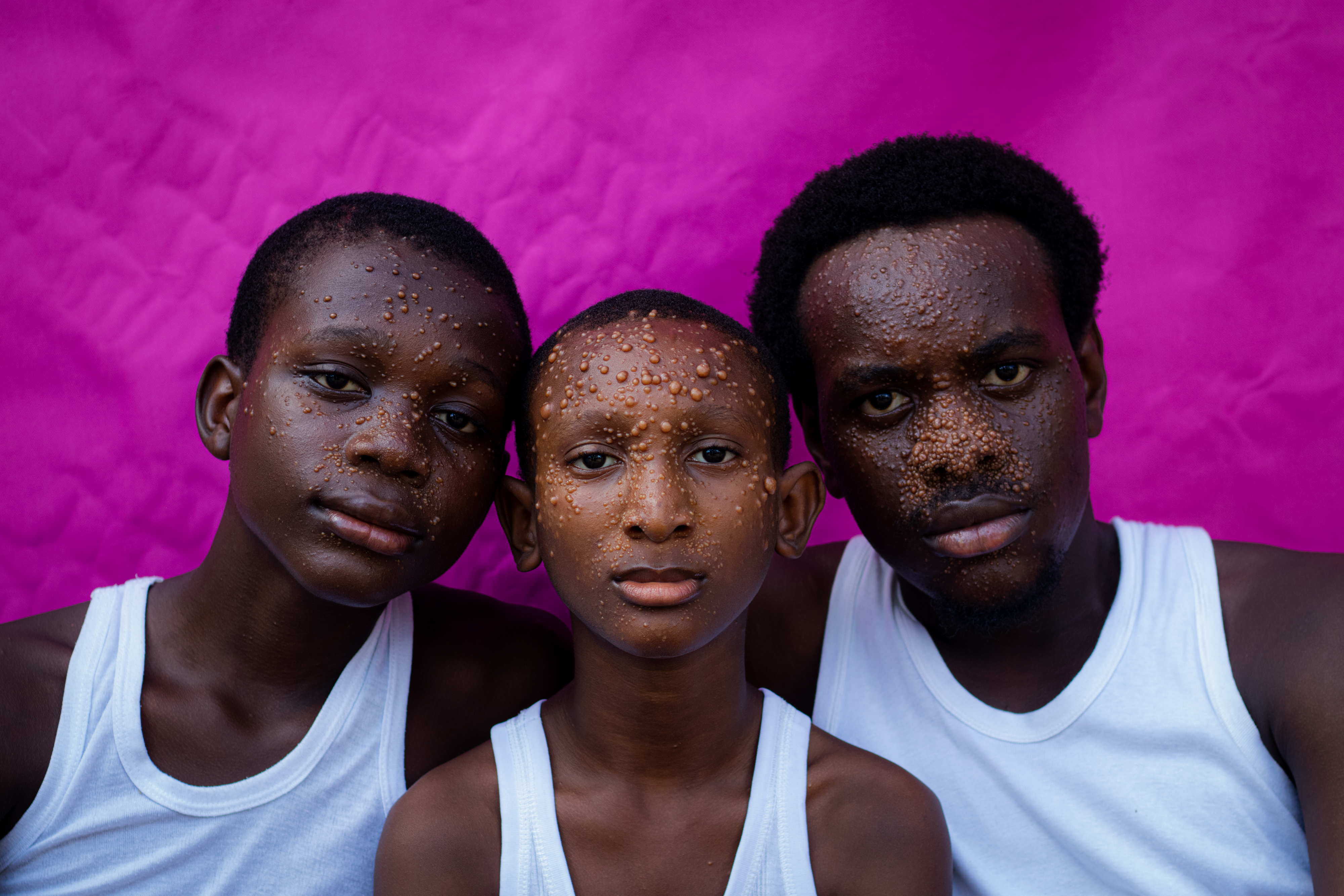
Family members photographed against the magenta backdrop.
In many religious spaces, difference is quickly spiritualised. Illness becomes evidence of hidden sin or ancestral wrongdoing. A body that does not conform must be corrected, cleansed, or cured. For my mother and her siblings, trichoepithelioma has often been framed not as genetics, but as punishment.
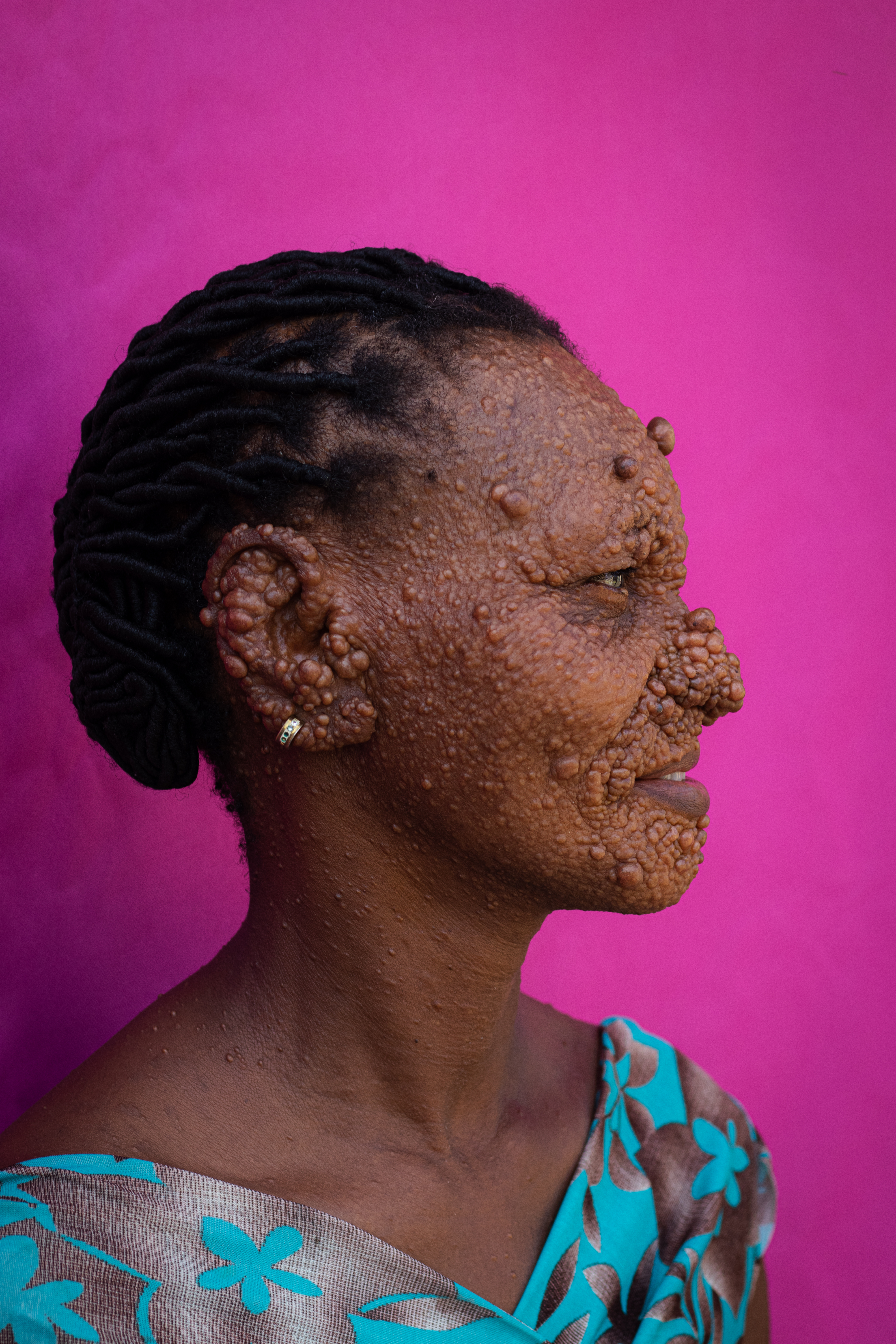
And yet, within our family, it has always simply been ours.